

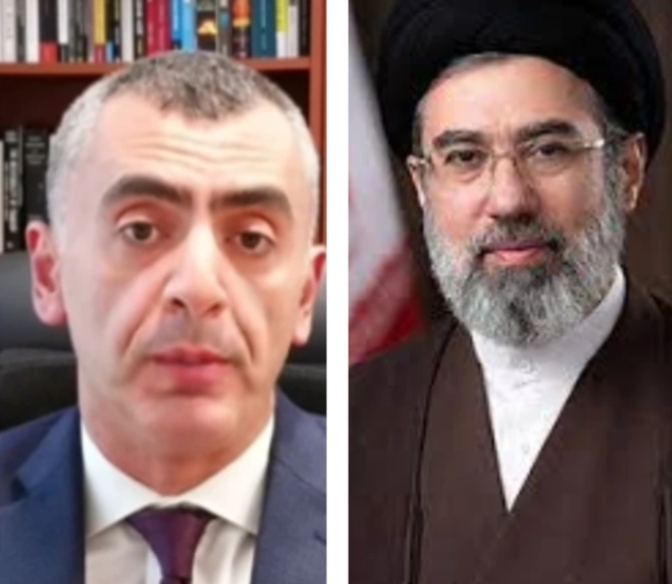
Sina Azodi, director of the Middle East Studies Program at George Washington University, has argued that Iran’s size and historical experience make it more capable of enduring the human and economic costs of war than the United States, even as Washington maintains overwhelming military superiority.
Azodi made the remarks during an interview from 9:20 with Al Jazeera English on Saturday, July 25, 2026, while discussing the escalating conflict between the United States and Iran and the prospects for diplomacy.
Assessing the balance of power, Azodi acknowledged that the U.S. military possesses unmatched capabilities but questioned whether battlefield dominance alone could achieve Washington’s broader political objectives.
According to him, military strength does not automatically translate into political success, noting that history has shown air campaigns often fail to compel an adversary to surrender or accept unfavorable terms.
Azodi argued that Iran’s resilience stems not only from its geographic size but also from its social and cultural capacity to withstand prolonged hardship.
“Iran is a large country. It is culturally different from the United States; it is more acceptable to absorbing pain and casualties,” he said.
He suggested that this ability to endure sustained pressure makes it difficult to determine which side currently holds the strategic advantage, despite the United States’ superior military capabilities.
Azodi maintained that while Washington has greater destructive power, the ultimate outcome of the conflict will depend on whether that military advantage can be converted into political gains. He added that Iran’s willingness to absorb economic hardship and wartime losses complicates efforts to force a quick resolution through military means alone.
The comments came amid continued fighting across the region and renewed debate over whether diplomacy or further military escalation is more likely to bring the conflict to an end.