

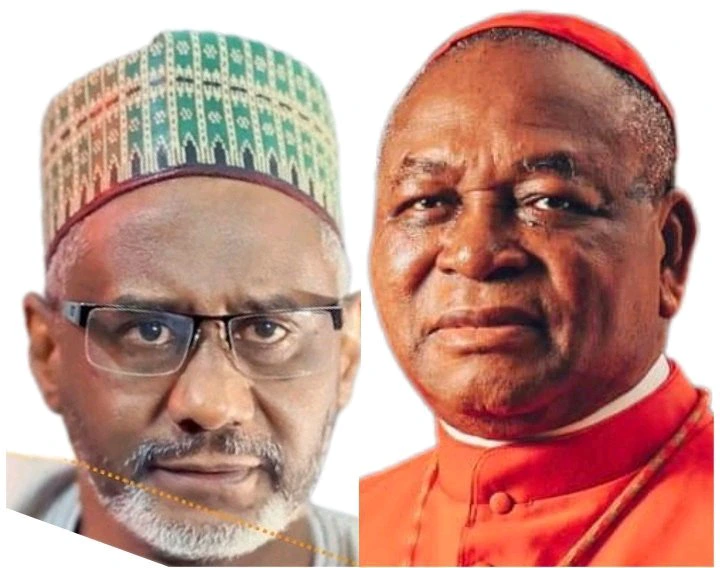
Former Executive Secretary of the National Health Insurance Scheme (NHIS), Professor Usman Yusuf, has urged religious leaders in Nigeria to continue speaking about the challenges facing ordinary citizens.
Yusuf made the remarks during an interview from 12:27 on Symfoni TV on Sunday, August 30, 2026, while discussing the role of religious leaders in Nigeria’s political and social affairs ahead of the 2027 general election.
The former NHIS chief referred to concerns raised by Cardinal John Onaiyekan and other Christian leaders over issues including hunger, insecurity and the rising hardship faced by Nigerians.
According to Yusuf, religious leaders are well placed to understand the challenges facing communities because of their close contact with people at the grassroots.
He said many Nigerians facing economic hardship, insecurity and other difficulties often turn to religious leaders and traditional authorities for help, guidance and consolation.
Yusuf said the concerns raised by clerics should be taken seriously by political leaders rather than dismissed as partisan criticism.
In his words, “What Cardinal Onaiyekan and many clergymen are telling politicians is what they are seeing from the people.”
He maintained that clerics who regularly interact with Nigerians have direct knowledge of the experiences and concerns of citizens.
According to him, religious leaders are often among the first people approached by members of their communities when they face serious difficulties.
He argued that their observations can provide political leaders with a clearer picture of the realities experienced by citizens outside government offices and official channels.
Yusuf said the concerns raised by religious leaders should not automatically be seen as political attacks on the government.
The professor’s comments come amid increased political activities ahead of the 2027 general election, with politicians, religious leaders and other public figures discussing the country’s economic and security challenges.
The role of religious leaders in national affairs remains a subject of debate in Nigeria, especially during election periods.
While some critics oppose the involvement of clerics in political matters, others believe religious leaders have a responsibility to speak about issues affecting their congregations.
Yusuf’s position is that politicians should listen to the concerns raised by religious leaders because those concerns often reflect the experiences of ordinary Nigerians.
He urged political leaders to pay attention to what clerics are telling them as the country approaches the 2027 general election.