

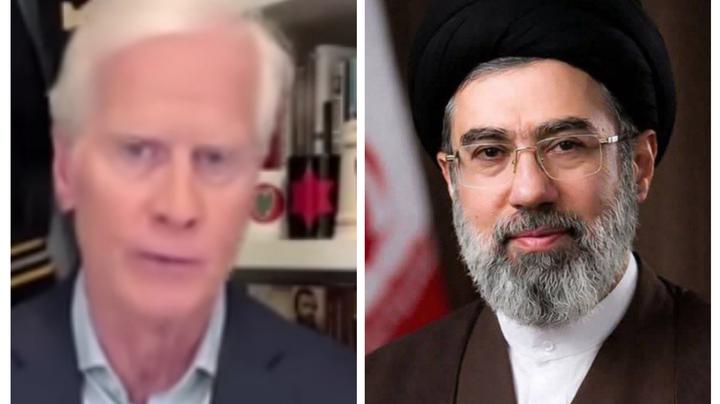
In a recent video from 34:39, Retired US Army Major General James Marks offered a sober and candid military assessment of conditions inside Iran on Piers Morgan Uncensored, acknowledging significant uncertainty about the country’s political and command structure in the aftermath of strikes that eliminated its supreme leader — while cautioning that tactical military success does not automatically translate into strategic victory.
Marks, a former military intelligence officer with decades of experience in US Army operations, joined the programme alongside US Army Special Forces veteran and Middle East Forum chief strategist Jim Hanson to provide a professional military perspective on the ongoing US-Israeli campaign against Iran. His assessment was notably more measured than the triumphalist framing offered by some political commentators, reflecting the complexity of post-strike conditions on the ground.
“We don’t know who’s in charge,” Marks stated, “and I doubt the Iranian people know who’s in charge, and I doubt anybody’s going to raise a hand and say I’m going to take the mantle of the burden of leadership, knowing full well if they go outside for a smoke break, they’re going to get shot in the head.” The remark captured both the disorientation within Iran’s power structure and the continued danger faced by anyone assuming a visible leadership role.
Despite acknowledging battlefield success — including what he described as the crushing of Iran’s command and control capabilities and significant degradation of its capacity to function as a legitimate governing authority — Marks warned that the longer-term strategic picture remained deeply uncertain. He invoked the Vietnam War as a reference point, noting that the United States had repeatedly won tactical engagements while losing the broader strategic contest.
Marks argued that Iran possessed one critical asymmetric advantage: a longer political time horizon. While US decision-making was constrained by electoral cycles, a vocal domestic electorate, and the inherent political costs of a prolonged military commitment, Iran could absorb punishment and wait. “From the perspective of who’s got the longer time horizon of how much longer we can withstand pain,” he said, “I think Iran has the ability to simply hang in there much longer than we do.”
He did, however, express confidence that the campaign had set back Iran’s nuclear programme significantly, and predicted that a combination of sustained military pressure and an economic blockade of the Strait of Hormuz could eventually compel negotiations over the highly enriched uranium that both he and Hanson identified as the war’s ultimate strategic objective. He also acknowledged frankly that without physical access to Iran’s nuclear sites, no assessment of how much enriched material remained could be considered fully reliable. Read_More…