

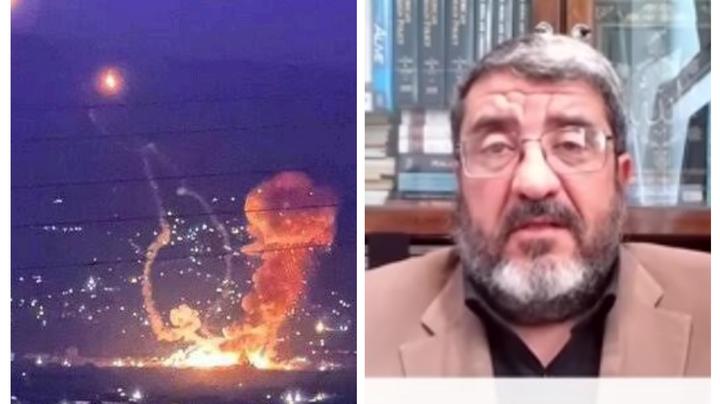
Iran’s ballistic missile program is not merely a military asset, it is the country’s primary strategic deterrent, and any agreement to limit it would fundamentally alter the regional balance of power. That is the argument advanced by a senior Iranian academic who warned that Washington’s demands go to the very heart of Iran’s national security posture.
Foad Izadi, Professor at the University of Tehran, speaking from 2:14 to Al Jazeera from the Iranian capital, stated that accepting American-imposed caps on Iran’s missile capabilities would mean surrendering the ability to strike Israeli population and military centers. “If Iran accepts that,” Izadi said, “then Iran wouldn’t be able to hit Tel Aviv and Haifa.”
The statement came as President Trump issued a 48-hour ultimatum to Tehran — demanding it either reopen the Strait of Hormuz or conclude a peace agreement, or face what the US president described as a massive military response targeting Iranian infrastructure including power plants.
Izadi argued that any limitation accepted by Iran would require rigorous and invasive verification mechanisms. In practice, he explained, this would mean American military inspectors entering Iran and measuring missiles at production facilities to ensure compliance. This, he contended, crosses a line of sovereignty no Iranian government could politically or practically accept.
The professor also situated the missile issue within a broader argument about the structure of the proposed negotiations. Having recalled that Iran signed a comprehensive deal with world powers in 2015 only to see Trump abandon it three years later, and having noted that a further agreement was reportedly within reach just before the current conflict erupted, Izadi framed the missile demand as the most revealing indicator of American intentions. A country genuinely seeking a deal, he suggested, does not open with conditions designed to eliminate the other party’s core defence capability.
Rashid Al Mohanadi, the Qatari security analyst appearing on the same panel, acknowledged that the Strait of Hormuz remains Iran’s singular point of leverage, noting that other Iranian military capabilities have been significantly degraded over the course of the current conflict — a point that sharpens the stakes around any missile-related concessions. Read_More…