

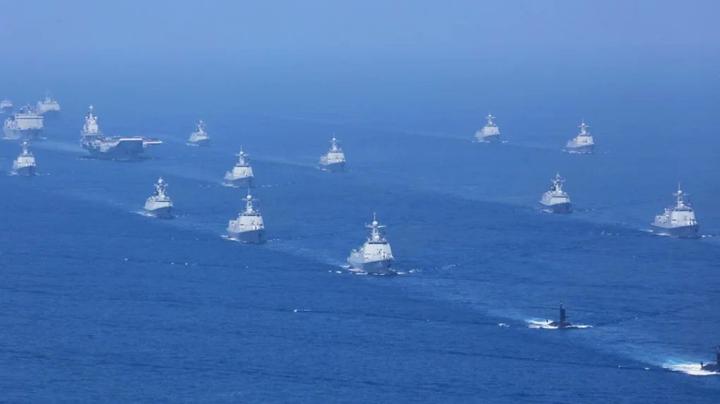
In a striking early testament to the power of American naval deterrence, every Iranian-linked vessel contacted by the United States Navy during the first 48 hours of the Gulf blockade complied without resistance, turning around and retreating without a single confrontation, France 24 International Affairs Editor Ketevan Gorjestani has reported.
Gorjestani, speaking on France 24 from 00:32, said that according to a CENTCOM statement issued 36 hours into the blockade, at least six ships with links to Iranian ports had been contacted by US naval forces and had subsequently chosen to reverse course. The Wall Street Journal further reported that the number may have climbed to eight vessels within the full 48-hour period.
“The US Navy called, and every single Iranian-linked ship turned around without a fight,” Gorjestani told viewers, encapsulating the remarkable compliance that US forces had achieved through deterrence alone, without resorting to any physical enforcement.
Among the vessels that reversed course was a Chinese tanker, the Rich Starry, which had passed through the Strait of Hormuz before ultimately turning back — a development that drew significant international attention given China’s trading relationship with Iran.
Gorjestani attributed much of this compliance to the sheer scale and strategic deployment of the American naval presence, which includes approximately 10,000 troops, a dozen warships, and a range of additional military assets. Crucially, she noted, these forces are not positioned within the strait itself but further along at the entrance in the Gulf of Oman — a location that maximises their operational effectiveness while minimising their exposure to Iranian attack capabilities.
The France 24 editor cautioned, however, that the absence of confrontation so far does not resolve every uncertainty. A key open question, she noted, is what the United States will do when — not if — it encounters a vessel that refuses to comply. The logistics of physically boarding and compelling a ship raise serious escalatory risks, and no protocol for such a scenario has been publicly detailed. Read_More…