

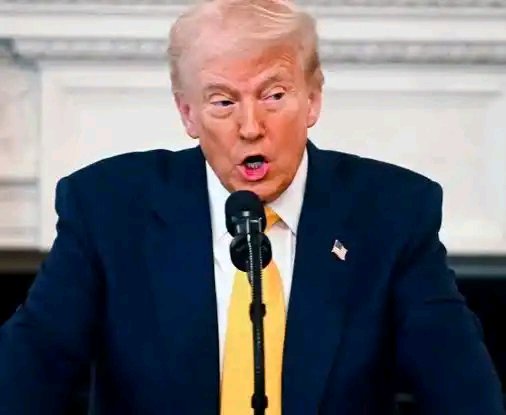
According to the Anadolu Agency, US President Donald Trump has made fresh claims about the impact of recent military operations against Iran, saying the country’s armed forces have been severely weakened and that Mojtaba Khamenei, the son and successor of late Supreme Leader Ayatollah Ali Khamenei, is “90% gone.”
Speaking during an interview with Fox News on Monday, Trump said Iran’s military had suffered devastating losses, arguing that the country’s ability to wage war had been drastically reduced.
“They have no navy. They have no air force. It’s all gone. Their anti-aircraft is gone. Their leaders have all been killed,” Trump said.
The president also claimed that many of Iran’s most senior military figures had been eliminated during the conflict.
“Their best leaders have been killed. They’re gone. Khomeini is gone,” he said, using the name of Iran’s late revolutionary leader while apparently referring to Ali Khamenei, who was killed during the opening wave of US-Israeli strikes on Iran in late February. Trump then added, “His son is 90% gone.”
Mojtaba Khamenei, who is widely regarded as his father’s political heir, is reported to be recovering from injuries sustained in the airstrike. His absence from the funeral ceremonies held for his father in Iran and Iraq earlier this month sparked widespread speculation about his health.
Trump’s remarks come as tensions between Washington and Tehran continue to rise following another round of strikes exchanged over the weekend. The renewed hostilities have heightened concerns about the possibility of a broader regional conflict.
The US president also announced that his administration was “reinstating” a blockade on Iran and said ships passing through the strategically vital Strait of Hormuz would be charged for safe passage, signaling a further tightening of pressure on Tehran.
The latest comments are likely to draw a sharp response from Iranian officials, who have consistently rejected US claims about the scale of damage to their military. As both countries continue to exchange military and political pressure, fears remain that the confrontation could further destabilise an already volatile Middle East….See More