

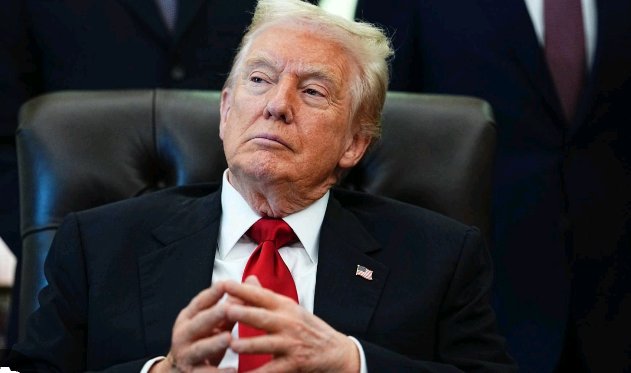
A prominent Saudi analyst, revealed that Saudi Arabia has lost confidence in the ability of the American Government under the leadership of President Donald Trump to provide reliable military protection, warning that President Donald Trump’s unwillingness to return to war with Iran will come at a significant political price.
According to a report made by the Jerusalem Post on Friday, 28 May, 2026, Mubarak al-Ati, a prominent Saudi analyst in an interview with Russia Today, characterized President Donald Trump as a paper tiger whose reluctance to overthrow the Iranian regime has diminished the standing of the American Government among Gulf allies, who no longer view American security guarantees as ironclad.
He also said “It seems that Trump refuses to return to war and overthrow the Ayatollah’s regime. This will cost him dearly,” arguing that the US president has failed to project the strength needed to maintain regional dominance.
The Saudi expert also traced the erosion of American credibility back to the Biden administration’s humiliating exit from Afghanistan in 2021, which he described as the first clear sign of US decline on the international stage, further saying “The US is still a superpower, but not as it was a decade ago,” pointing to rising powers such as India, Brazil, and Saudi Arabia itself, all G20 members that can now establish relations with all forces, not just with the US.
Ati went further to add that the weakening of American influence has directly undermined Trump’s push to expand the Abraham Accords, with Gulf and other Muslim countries no longer taking Washington’s demands for normalization with Israel seriously, explaining “Saudi Arabia refrained from being drawn into war and did not stand alongside Israel and the United States, just as it did not stand alongside Iran.”
He also emphasized that the Kingdom of Saudi Arabia has positioned themselves as an independent actor who could not be a satellite of Israel and the US.
Ati also said the kingdom had already begun pushing back against Israeli presence in the region, including in Sudan, South Yemen, and Somaliland, signaling that they would not join the normalization accords….Read_More…