

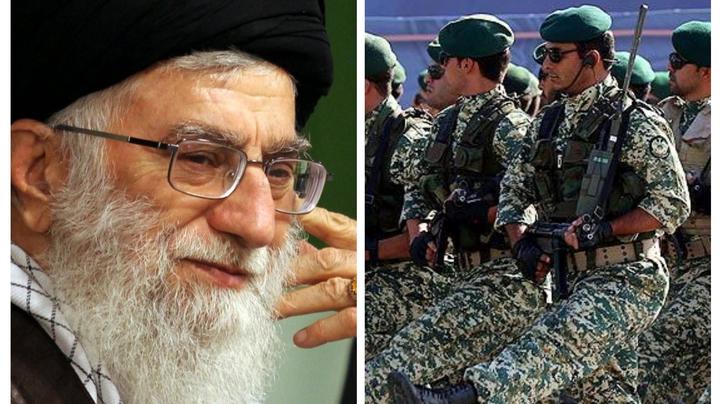
The Islamic Revolutionary Guard Corps has fractured to the point where Iran’s own negotiators cannot guarantee the behaviour of the forces nominally under their command — a breakdown in authority that Alex Traiman, CEO of JNS TV from 21:49, described as both the most alarming and the most strategically revealing development of the US-Iran ceasefire period.
Speaking on the Jerusalem Minute broadcast, Traiman argued that the chaos unfolding in the Strait of Hormuz was not incidental to the negotiating process — it was diagnostic of it. “There are indications here that what remains of the IRGC is highly fractured,” he said, “and that’s actually a good sign if you want to get toward regime change in Iran.
What you want to see is that there is no consolidated control mechanism — if you see different factions operating on their own, that indicates less stability, less control, and may give more opportunities to dismantle the remainder of the regime.” The IRGC’s loss of coherence, he argued, was the proof that the people across the negotiating table had no real authority over the forces conducting operations in their name.
The most concrete illustration of this breakdown, Traiman noted, came from an incident involving an Indian commercial vessel during the ceasefire period. According to recordings from the episode, the ship’s crew had been explicitly told by Iranian authorities that the strait was open and safe to transit. They proceeded accordingly — and were then fired upon by Iranian forces. The crew’s recorded response captured the absurdity of the situation: they had been promised safe passage, acted on that promise, and were now being shot at. The incident, Traiman argued, made clear that whoever had authorised the vessel’s transit had no control over whoever was pulling the trigger.
He explained that this was precisely why entering a ceasefire had intelligence value beyond its immediate military function. A pause in fighting created the conditions to test whether Iran’s diplomatic representatives actually spoke for the state. The answer, based on observable behaviour during the current ceasefire, was that they did not — or at least not entirely. Different IRGC factions appeared to be conducting their own operations without reference to the government’s stated positions, creating a situation in which Tehran could simultaneously negotiate and attack.
What Remains of The IRGC Is Highly Fractured and That’s A Good Sign for Regime Change” Traiman drew a direct line between this fracturing and the US and Israeli campaign against Iran’s senior leadership. Strikes had targeted the Supreme Leader, IRGC commanders, and other figures at the apex of the Iranian security establishment. Read_More…