

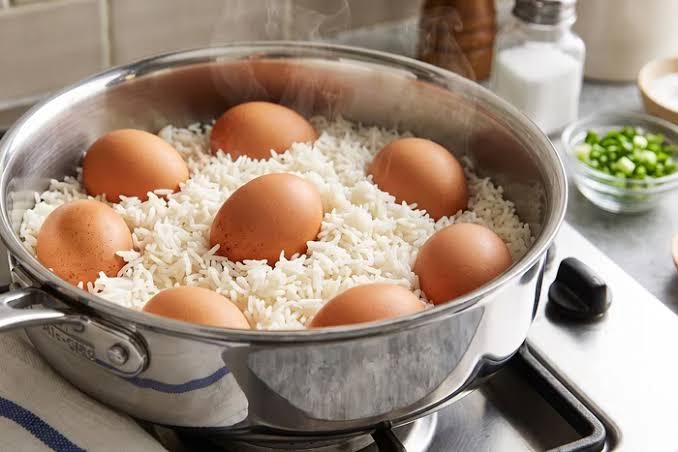
There is a popular claim that cooking rice and boiling eggs together is dangerous because the foods supposedly release harmful substances into each other. That is not true. However, there are some food-safety reasons to be careful if you cook them together in the same pot.
1. The eggs may carry bacteria on their shells
Raw eggs can sometimes have bacteria such as Salmonella on their shells. If you place unwashed eggs directly into a pot of rice, bacteria from the shell could potentially contaminate your hands, utensils or other surfaces.
2. The rice must be cooked properly
Rice can contain spores of Bacillus cereus, a bacterium that can survive cooking. The bigger risk comes after cooking: leaving cooked rice at room temperature for too long allows bacteria to multiply and produce toxins. Cooked rice should therefore be cooled and refrigerated promptly if it will not be eaten immediately.
3. Cracked eggs are a bigger concern
If an egg cracks while boiling, its contents can leak into the rice. This does not automatically make the rice poisonous, but it can affect hygiene and food quality, particularly if the egg was contaminated.
4. Eggs need to be fully cooked
If you are boiling eggs, make sure the whites and yolks are properly cooked, especially when preparing food for children, pregnant women, older adults or people with weakened immune systems.
5. The safest option is to keep preparation clean
You can cook rice and eggs during the same meal without a problem. If you choose to boil the eggs in the same pot, use clean, intact eggs, wash your hands after handling them and make sure both the rice and eggs are properly cooked.