

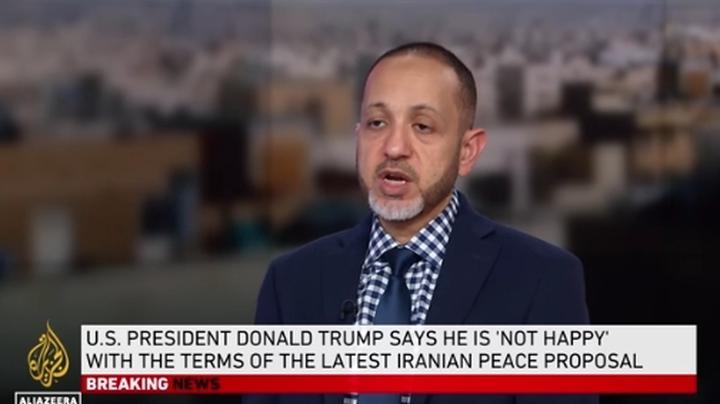
In recent video from 3:09, A prominent Middle East scholar has pushed back forcefully against the framing of Iran as an aspiring nuclear power, arguing that Tehran already demonstrated its willingness to foreclose the nuclear weapons option through a binding international agreement more than a decade ago.
Muhammad Elmasry, Professor at the Doha Institute for Graduate Studies, made the argument during an interview on Al Jazeera, contending that the current American position on Iran’s nuclear ambitions is difficult to reconcile with the historical record and the intelligence assessments produced by Washington’s own agencies.
“It’s very difficult for me to wrap my head around the Trump position on the nuclear weapons issue,” Elmasry said, “because Iran already signed up to a deal, the JCPOA, which I just referenced, in 2015, that would have made it effectively impossible for them to get a nuclear weapon. They have a fatwa on the books, a religious edict on the books that forbids them from developing a nuclear weapon. There is no indication, not even from US intelligence, that they were building a nuclear weapon or close to getting to a nuclear weapon.”
Elmasry’s remarks go to the heart of one of the most contested dimensions of the current diplomatic standoff. The professor argued that Iran has, across multiple fronts, taken on binding commitments against nuclear weapons development. These include the legally enforceable terms of the 2015 JCPOA, a religious ruling that carries significant authority within Iran’s governance structure, and a consistent absence of evidence, even from American intelligence, of active weapons development.
He further noted that what Iran has consistently asked for is considerably more limited than its critics suggest. Tehran, he said, is asserting a right enshrined in international law, namely the right to enrich uranium to peaceful civilian levels. He also noted that Iran has proposed creative and verifiable solutions to the question of its stockpile of highly enriched uranium, including dilution and offshoring, demonstrating a degree of flexibility that Elmasry suggested has been insufficiently acknowledged by the American side…Read_More…