

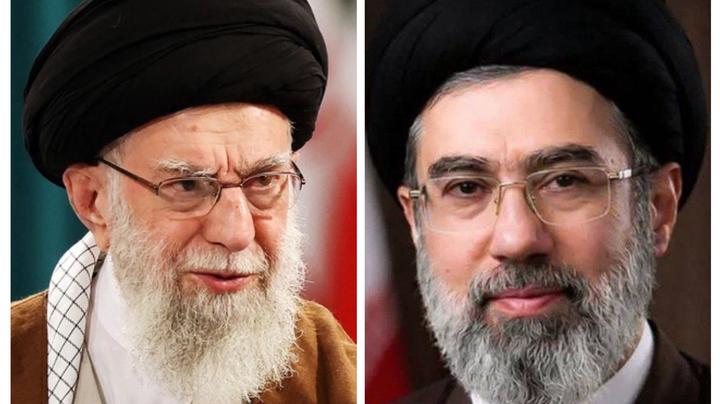
According to a report by New York Post, on Monday March 16, 2026, for decades, Ayatollah Ali Khamenei ruled Iran with an iron grip, shepherding the Islamic Republic through wars, sanctions, and international isolation while carefully curating the country’s image as a bastion of strict Islamic values. But in his final years, as the question of succession loomed larger, the aging supreme leader reportedly wrestled with a deeply personal and politically explosive concern — one that centered not on foreign enemies or domestic rivals, but on his own son.
According to multiple sources familiar with classified U.S. intelligence briefings, the late Ayatollah privately suspected that his son Mojtaba Khamenei, now 56 and Iran’s newly installed Supreme Leader, may be gay. That suspicion, sources say, was among the reasons the elder Khamenei hesitated before settling on his son as a successor — a reservation that ultimately went unresolved when a U.S. airstrike on February 28 killed the Ayatollah along with other members of his family, forcing a rapid succession decision that placed Mojtaba atop the Islamic Republic on March 8.
“His father and others suspected he was gay and that was something that people were spreading to try to stop his ascension,” one source explained to The New York Post.
The allegation is not one the U.S. government is treating lightly. Two intelligence community officials and a third individual with close ties to the White House independently confirmed to The New York Post that American spy agencies regard the claim as credible — not as disinformation engineered to destabilize Khamenei’s new leadership. One source described the intelligence as originating from “one of the most protected sources that the government has,” a characterization that signals an unusually high degree of institutional confidence in the underlying information.
“The fact that this was elevated to the highest of high levels shows you there’s some confidence in this,” a second source added.
Mojtaba’s purported sexual orientation had reportedly been whispered about inside Iran since at least May 2024, following the helicopter crash that killed then-President Ebrahim Raisi — the man widely considered the elder Khamenei’s preferred choice for succession. With Raisi gone, the path toward Mojtaba’s ascension opened, even as doubts about his suitability continued to circulate quietly within Iran’s clerical inner circle.
Within the U.S. government, the matter had been “a pretty closely held piece of information” for some time before it reached the presidential briefing level, one insider noted.
The intelligence carries particularly sharp irony given the legal and political framework Mojtaba Khamenei now presides over. Homosexual conduct is explicitly criminalized under Iranian law. Sodomy is classified as a capital offense, and the Iranian government has a documented history of executing men convicted of same-sex conduct — in some cases publicly, suspended from construction cranes as a visible warning to others. The man who now sits atop that legal and religious order, according to U.S. intelligence, may himself be subject to its harshest penalties.
The elder Khamenei’s reported hesitation over his son’s personal life was not the only factor complicating the succession picture. A classified U.S. diplomatic cable from 2008, later published by WikiLeaks, documented that Mojtaba had married unusually late — around age 30 — due to an impotence condition that required four separate extended visits to hospitals in London, specifically Wellington and Cromwell Hospitals, before being resolved. His family had expected him to produce children quickly, but a fourth trip abroad lasting two months was ultimately required before his wife became pregnant.
His wife, Zahra, and their teenage son, Mohammad Bagher, are believed to have died in the same February 28 airstrike that killed the Ayatollah. Mojtaba is also believed to have been wounded in that strike, and one source told The New York Post that while receiving medical care — possibly under heavy medication — he made what were described as “aggressive” sexual advances toward male caregivers.
Despite all of it — the private doubts, the whisper campaigns inside Iran, the foreign medical history, and the intelligence assessments circulating at the highest levels of the American government — Mojtaba Khamenei now holds the most powerful position in the Islamic Republic. He commands the Revolutionary Guard, controls foreign policy, and serves as the final word on all matters of governance in a nation of 93 million people.
President Trump, who was briefed on the intelligence last week, reportedly laughed aloud upon hearing it. Others in the room shared in the reaction, and one senior intelligence official, according to a source, had not stopped laughing about it for days.
Trump had previously described Mojtaba Khamenei as a “lightweight” and called him an “unacceptable” choice to lead Iran — remarks made before the full picture of what U.S. intelligence knew about the new supreme leader had been publicly reported.
What the late Ayatollah feared, it appears, has now become the Islamic Republic’s most sensitive open secret. Read_More…