

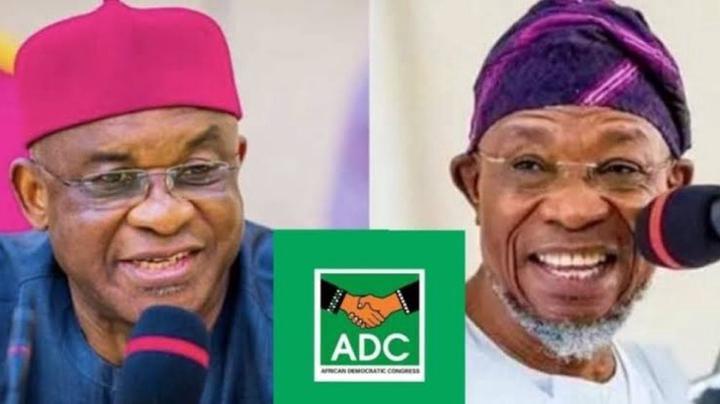
Fresh controversy has emerged within Nigeria’s political landscape following comments by Lere Olayinka, media aide to the Minister of the Federal Capital Territory, Nyesom Wike, over alleged attempts by prominent politicians to take control of the African Democratic Congress (ADC).
Olayinka’s reaction comes in the wake of reports that the Independent National Electoral Commission (INEC) removed the names of David Mark and Rauf Aregbesola as National Chairman and National Secretary of the ADC, respectively, in compliance with a recent court ruling.
The development has intensified scrutiny around the party’s leadership structure and the broader implications for opposition politics in the country.
In a statement shared on his official X (formerly Twitter) account, Olayinka questioned both the legality and the reasoning behind claims that certain high-profile political figures were seeking to gain control of the party through unconventional means.
He specifically referenced reports suggesting that former Vice President Atiku Abubakar, alongside David Mark, Rauf Aregbesola, and former Rivers State governor Rotimi Amaechi, were involved in efforts to “buy” the party through arrangements allegedly centered on its national chairman.
Expressing skepticism, Olayinka cautioned against what he described as emotionally driven narratives, urging a more rational assessment of the situation.
“When we stop being emotional, we will get things right,” he said, emphasizing that political processes must be guided by established rules rather than speculation or sentiment.
He further raised concerns about the procedural implications of such claims, questioning whether the resignation of a party’s national chairman could automatically invalidate the entire National Working Committee (NWC). According to him, party structures are governed by institutional frameworks that cannot be sidestepped through individual agreements or informal negotiations.
Olayinka’s remarks have added a new dimension to ongoing discussions about political realignments ahead of future elections, as well as the stability of party leadership structures. Read_More…