

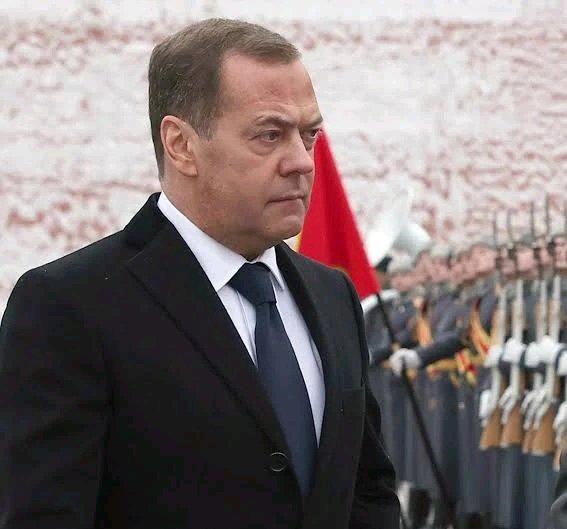
Russian Security Council Deputy Chairman Dmitry Medvedev delivered a sharp, unsettling message to the world on X, just hours after the United States and Iran announced a ceasefire — warning that Iran’s most dangerous weapon has nothing to do with enriched uranium.
“It’s not clear how the truce between Washington and Tehran will play out. But one thing is certain — Iran has tested its nuclear weapons. It is called the Strait of Hormuz. Its potential is inexhaustible,” the former Russian president wrote in a post that quickly drew international attention.
The remarks arrived at a moment when global attention was fixed on the fragile diplomatic agreement between two longtime adversaries. Rather than welcome the ceasefire, Medvedev used the occasion to spotlight what he described as Iran’s enduring and limitless strategic power — the Strait of Hormuz, a chokepoint so critical to global energy flows that any threat to it sends immediate shockwaves through financial markets and foreign ministries alike.
Approximately 20 percent of the world’s traded oil passes through the narrow strait daily, making it one of the most consequential waterways on the planet. Iran, which shares its northern coastline, has on multiple occasions threatened to close the strait in response to Western sanctions and military pressure. Medvedev’s framing of the strait as a “nuclear weapon” was unmistakably intentional — a rhetorical escalation designed to remind Washington that the ceasefire does not neutralize Tehran’s most consequential leverage.
For Moscow, which has maintained close ties with Tehran throughout the period of Western pressure, the statement serves a dual purpose — undermining confidence in the American-brokered arrangement while elevating Iran’s position as a power not easily cornered. Medvedev’s post was pointed, calculated, and timed for maximum effect.
The ceasefire between Washington and Tehran may have paused open hostilities, but as Medvedev made plain, the deeper contest over power, energy, and influence in one of the world’s most volatile regions is nowhere near resolved. Read_More…